



TSMC is ARM’s closest partner for manufacturing, and to many the given choice for manufacturing. The two have now designed a dual-core Cortex-A9 clocked at 3.1 GHz using the latest 28 nanometer HPM technology.
The need for high-end ARM processors is still relatively low, but is expected to grow with the launch of Windows 8 that supports the instruction set.
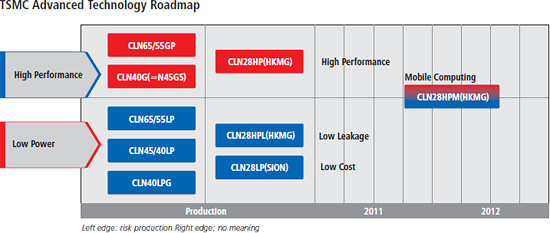
TSMC’s latest manufacturing technology at 28nm is called HPM (High Performance Mobile Computing), and is a mix of 28HP that AMD and NVIDIA use for their graphics circuits and 28HPL that among others Qualcomm uses for designing system processors for smartphones in the latest Snapdragon S4 family. With the new 28HPM technology the company has designed a dual-core Cortex-A9 processor clocked at 3.1 GHz, the highest clocked ARM chip so far. For system processor developers that are keen on using Cortex-A9 with the 28HPM technology can expect frequencies in the range of 1.5 – 2.0 GHz for mobile products like smartphones and tablets.
Clock frequencies up to 3.1 GHz are reserved for high performance uses, which we assume are non-mobile products. Cortex-A9 will most llikely have lower licensing costs than Cortex-A15, so it is not unlikely that we will be seeing some new system processors with the older architecture in the future. It at least looks like there is more performance to get than we have seen so far with ARM Cortex-A9.
Source: TSMC
No active posts found.